




SWITCH
Learning to
Ask not Tell
Capstan Partners, Australia and New Zealand’s No 1 coaching and coaching education provider
to the healthcare sector is here for you.
About the Program

Learn to coach - workshop inclusions
- Full day of in-person, two instructors-led facilitation
- Live coaching demonstrations
- Six hours CPD
- One unit accredited towards an ICF Diploma of Coaching
- Activity workbook
- Certificate of completion
- Maximum of 24 participants per workshop
- Refreshments and catered lunch provided
Receive coaching - turn your learning into deeper capabilities
- Embed your coaching skills: The workshop gives you the foundations. The coaching sessions help you experience, refine, and apply the skills with confidence
- Get support on real issues: Bring your own challenges and leave each session with clearer approaches you can use immediately.
- Make it stick: Spaced coaching reinforces new habits so your learning lasts and delivers real impact.
- Convenience: Receive your three virtual sessions at times that work for you.
Healthcare professionals come together for an intensive, interactive workshop* to learn about coaching, develop coaching skills and practice how to lead coach-like conversations. Individual coaching sessions enable clinicians to experience coaching and help identify and work towards what is important for them.
*Curriculum provided by AIPC. Options to complete self-paced on-line units of study are available and will be recognised as prior learning for credentialling by the International Coaching Federation towards a Certificate of Coaching or Diploma of Professional Coaching. Facilitation and coaching provided by a panel of professional coaches from Capstan Partners.
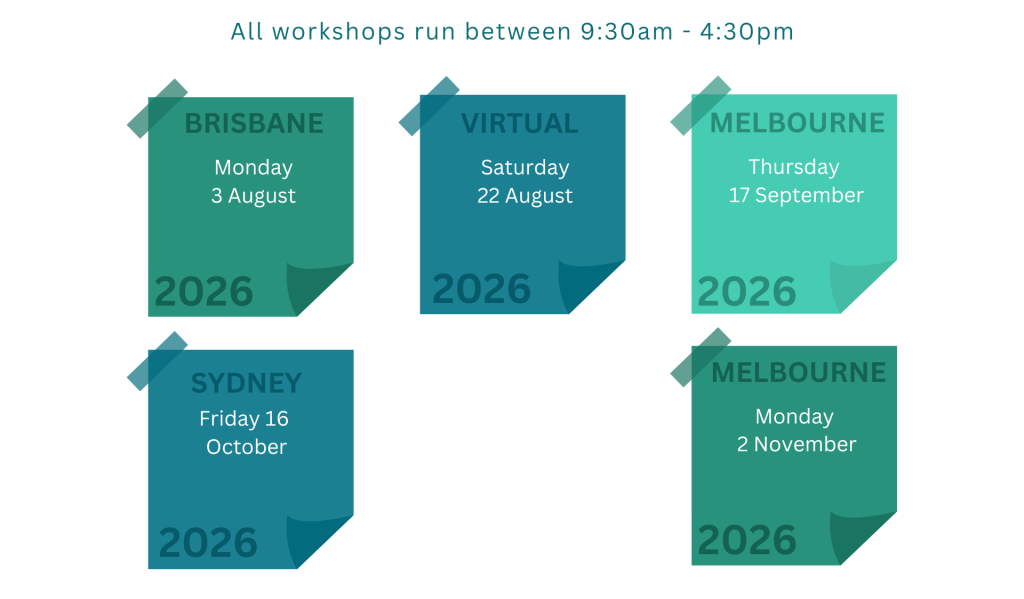
Workshop Dates for 2026 are here!
Limited 2-for-1 OFFERS for MEDICAL TRAINEES
who register by 14 August
What is
Coaching?
‘… is partnering with clients in a thought-provoking and creative process that inspires them to maximise their personal and professional potential. The process of coaching often unlocks previously untapped sources of imagination, productivity and leadership.’
International Coaching Federation
Workshop Learning Outcomes
Understand Coaching
- How is coaching different from mentoring and other learning interventions?
- What is coach-like behaviour?
- Review ways to apply coaching in the workplace
Build coaching skills and practice
- Active and Reflective listening, Powerful question, Summarising
- EDC(c) Coaching Process
- Coaching skills and applying them at work
Coaching Outcomes
Coaching skills help doctors to create a safe and supportive environment to explore ideas and develop professional skills. Additionally, clinicians who receive coaching consistently benefit from improved psychological wellbeing.
Register here and download program details, terms and conditions.
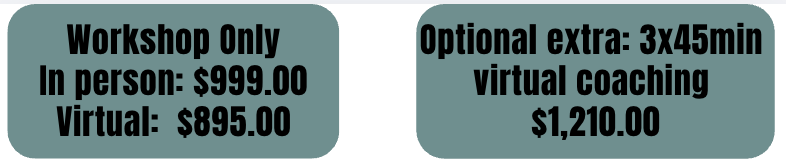
Your Investment ($AU inc GST)
This program is likely to contribute to CPD credit with various Colleges.Are you a proactive healthcare professional looking to improve clinical leadership, psychological wellbeing and create a coaching-culture in your department?
Hosting a program for your workforce is likely to give you the return on investment you are looking for. Please book a time to discuss how your team can benefit. We can connect you with Directors of Medical Services whose teams are already enjoying the benefits from these programs.

Ideal Participants
High performing healthcare professionals wanting to learn foundation evidence-based coaching skills (complementing their teaching, mentoring and consulting skills): to expand their leadership insights to be more coach-like, build the capacity, performance and trust of their team and patients and improve their psychological wellbeing.

Important Information
Up to 24 participants attend one workshop 09:30-16:30. Participants are required to consent to program T&Cs confirming confidentiality and other important considerations and complete intake and evaluation surveys. In addition to providing key leadership skills, attendees have an opportunity to earn Continuing Professional Development points in both Category 1 – educational activities and Category 2 – reviewing performance.
The option for workshop attendees to receive three 45 minute virtual coaching sessions at 25% discount within three months is available.
This program is likely to contribute to CPD credit with various Colleges.
Participant Feedback
‘Practical, focused on what I wanted to get out of it, flexible in that goal which I appreciated’ | ‘Very good workshop, I feel confident to use it in the workplace. I think good things can come of it’ | ‘Great course really helped with holding back opinions and stopping asking why’ | ‘A great introduction. Very engaging presenters’ | ’Came away with lots of ideas and applications for day to day education’ | ‘A very valuable experience’
Organisational Programs
Are you a leader looking to host a 'SWITCH: Learning to Ask not Tell' program to build leadership capability and psychological wellbeing for your team?
Please get in touch to discuss how we can deliver coaching skills programs to give your department the professional development and return on the investment you are looking for. And we’d happily connect you with Directors of Medical Services who currently benefit from their programs.
Frequently Asked Questions
Common questions about SWITCH: Learning to Ask not Tell ©. If you have a question that isn't answered here and you'd like it answered, please let us know.
What is the SWITCH program about?
Capstan Partners' SWITCH: Learning to Ask not Tell © program for healthcare professionals includes a one-day coaching-skills workshop, available in person or online, and an option to receive a discounted virtual coaching program.
The workshop runs 9:30am to 4:30pm with two instructors and up to 24 participants, and teaches foundation evidence-based coaching skills — active and reflective listening, powerful questions, summarising and the EDC© coaching process — through live demonstrations and supervised practice. A certificate of completion for six hours CPD, one unit accredited towards an ICF Diploma of Coaching, catering (in-person workshops) and a comprehensive workbook are all included.
The option to receive three virtual coaching sessions within three months after the workshop means you can experience, refine and apply your coaching skills with intent and confidence.
What does ‘SWITCH: Learning to Ask not Tell’ mean?
It refers to the coach-informed leadership behaviours and workplace cultural shift from a directive style, where a healthcare professional provides answers, to a coach-like style, where they ask questions that help the other person find their own solutions.
Clinical training rewards telling, when a fast fix is needed and there is often a binary solution. But telling builds dependence, disempowers staff, and burdens the leader to have all the answers. Asking powerful questions and listening actively is known to build capability, trust and independent judgement in team members, and leaders are likely to feel, and be, less stressed.
What's included in the SWITCH: Learning to Ask not Tell workshop?
- A full day of facilitation led by two instructors, delivered in person or online
- Live coaching demonstrations and supervised practice
- Six hours of CPD across Category 1 (educational activities) and Category 2 (reviewing performance)
- One unit accredited toward an ICF Diploma of Coaching, with curriculum by the Australian Institute of Professional Coaching
- An activity workbook and certificate of completion
- Refreshments and catered lunch (in-person workshops)
- A maximum of 24 participants per workshop
Who should attend the SWITCH: Learning to Ask not Tell workshop?
The SWITCH: Learning to Ask not Tell workshop suits all high-performing healthcare professionals — doctors, nurses, executives, administrators and allied health professionals — who want to add coaching skills to their teaching, mentoring, supervision and leadership toolkit, and create healthier workplace behaviours and cultures.
It is particularly relevant for supervisors of training, clinical leaders and medical educators who want to lead more coach-like conversations, build team capability and trust, and improve their own psychological wellbeing.
Do I need any coaching experience to attend the SWITCH: Learning to Ask not Tell workshop?
No. SWITCH: Learning to Ask not Tell is a foundation workshop designed for healthcare professionals with no prior coaching training. It complements skills you already have — teaching, mentoring, supervising and consulting — rather than assuming any background in coaching.
What will I be able to do after the SWITCH: Learning to Ask not Tell workshop?
By the end of the day you will be able to hold a coach-like conversation using active and reflective listening, powerful questions and summarising, and follow the EDC© coaching process. You will recognise where coaching is more useful than telling or instructing at work.
Coaching skills help healthcare professionals create a safe and supportive workplace to explore ideas, develop professional skills, capability and accountability, and improve psychological wellbeing for themselves and others they care about.
Does the SWITCH: Learning to Ask not Tell workshop count toward a coaching qualification?
Yes. The SWITCH: Learning to Ask not Tell curriculum is provided by the Australian Institute of Professional Coaching (AIPC), and completion is accredited as one unit toward an ICF Diploma of Coaching.
Optional self-paced online units are available and are recognised as prior learning by the International Coaching Federation toward a Certificate of Coaching or Diploma of Professional Coaching.
How do I become a credentialed coach from here?
The SWITCH: Learning to Ask not Tell workshop is the entry point: the workshop provides one accredited unit toward an ICF Diploma of Coaching. From there, you complete further AIPC units and accumulate coaching hours — which Capstan's Coaching Exchange is designed to provide — before applying for ICF credentialing.
For more information about AIPC, or about ICF credentialing.
Is the SWITCH: Learning to Ask not Tell workshop CPD-accredited?
Yes, for most attendees, when the program is relevant to a clinician's scope of practice and completed within the requirements of their CPD home, medical college or recertification provider.
Attendees usually earn six hours of CPD spanning Category 1 (educational activities) and Category 2 (reviewing performance) with various Colleges in Australia and New Zealand. A certificate of completion is provided for your records.
Participants should confirm eligibility before enrolling and retain appropriate evidence of participation, learning, reflection and outcomes.
How much does the SWITCH: Learning to Ask not Tell program cost?
Fees in AUD including GST:
| Workshop only | from $880.00 (virtual) to $990.00 (in person) |
|---|---|
| Optional 3 × 45min virtual coaching sessions | $1,100.00 |
RACP members receive a 10% discount through the RACP Member Benefits platform.
What happens after the SWITCH: Learning to Ask not Tell workshop? How do I embed the skills?
Workshop attendees can add three 45-minute virtual coaching sessions at a 25% discount within three months of attending. Being coached after learning to coach lets you experience the coaching process from the client's side, apply the skills to your own real challenges, and turn a single day of training into lasting habit change.
In addition, optional self-paced online units of study are available through the Australian Institute of Professional Coaching (AIPC) and are recognised as prior learning by the International Coaching Federation toward a Certificate of Coaching or Diploma of Professional Coaching.
Is the SWITCH: Learning to Ask not Tell program available online?
Yes. SWITCH: Learning to Ask not Tell is available online, so healthcare professionals anywhere in Australia and New Zealand — including those in regional and remote locations — can complete the workshop without travelling. The online workshop covers the same curriculum and carries the same six hours of CPD and the same ICF-accredited unit as the in-person workshop.
The option to add three 45-minute virtual coaching sessions at a 25% discount within three months is available to online and in-person attendees alike.
Can we run the SWITCH: Learning to Ask not Tell program in-house for our department or health service?
Yes. SWITCH is regularly commissioned by health services and departments. Recent in-house clients include Westmead Hospital's Emergency and Intensive Care Departments (Sydney, NSW), Alfred Health Emergency (Melbourne, Victoria), Lismore Base Hospital (regional NSW), and Northern Adelaide Local Health District (Adelaide, South Australia).
To discuss an in-house program, contact info@capstan.com.au or call 0413 599 009.
What's the return on investment for a department hosting a SWITCH: Learning to Ask not Tell program?
The return on investment of hosting SWITCH: Learning to Ask not Tell is both financial and cultural. Financial benefits may include lower turnover and recruitment costs, improved productivity and psychological wellbeing, fewer avoidable escalations and stronger internal leadership capability.
Non-financial benefits include greater psychological safety, trust, engagement, accountability, communication quality and clinician wellbeing. The strongest return is achieved when the workshop is reinforced through shared accountability for embedding coaching behaviours into workplace practice, follow-up coaching and outcome measurement.
These are potential organisational benefits rather than guaranteed outcomes; the department should evaluate them against its own baseline data and objectives.
How many people do we need for an in-house SWITCH: Learning to Ask not Tell program?
To optimise the workshop interactions and learning outcomes we typically invite a minimum of 24 attendees.
We offer tailored programs and pricing and, where appropriate, discounted rates for organisations engaging multiple participants or commissioning larger coaching or professional development programs. Program details and pricing depend on the scope, duration and number of participants. Contact us to discuss your requirements.